2027 Classes
April Class Schedule
Saturday Morning
Saturday Afternoon
Sunday Morning
Sunday Morning
August Class Schedule
Saturday Morning
Saturday Afternoon
Sunday Morning
Sunday Morning
Saturday Morning Class Descriptions

Fission Knitting–Jenn Lampen
Fission knitting is a style of colorwork that allows you to create fully reversible designs on a marled garter stitch background. Cables are used to draw independent designs on each side of the fabric. This versatile technique, developed by Mary Martin, allows you to create beautiful, two sided designs, without worrying about floats or tension. In this class, you will learn the fundamental rules of fission knitting, and practice a range of basic stitches to unlock a world of design possibilities.
Skill Level: Intermediate
Required Skills: Students should be confident with basic knitting techniques like casting on, knitting, purling, and binding off, as well as basic cable knitting techniques.
Homework: None
Materials Fee: None
Supplies to Bring: Two contrasting colors of fingering weight yarn (stash leftovers are fine, solid colors or semisolids recommended), US7/4.5mm knitting needles, cable needle, locking stitch markers.

Mini Shetland Hap Workshop - Heather Storta
Shetland lace is one of several unique and beautiful lace traditions. In this workshop, we'll learn the history behind this lace tradition and what makes it different from other lace traditions. Students will knit a mini Hap, a traditional square Shetland shawl with a special construction method. Homework will allow students to complete part of the edging at home so they’re ready for the next stages of the hap construction.
Skill Level: Intermediate/Advanced
Required Skills: Lace knitting skills, increases, decreases, yarnovers.
Homework: Shetland Hap Homework
Materials Fee: None
Supplies to Bring: Homework. Lace 2-ply yarn, about 200 yards. Size US 5 (3.5mm) circular needles, 24" or longer. Waste yarn (smooth yarn in same or lighter weight as working yarn, in contrasting color). 2 dpns, Size US 4. Tapestry needle.
Steeking 4 Ways – Tanis Gray
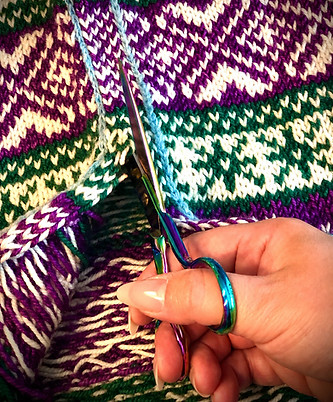
Interested in steeking, but the thought of taking scissors to your knitting sends shivers down your spine? We’ll learn how to secure and cut our knitting 4 different ways with ease on swatches before you tackle that sweater pattern you’ve had your eye on! You’ll learn the single crochet method (no crochet experience necessary), the backstitch method, the needle felting method, and the sewing machine method.
Skill Level: Intermediate
Required Skills: Must have previous colorwork experience. This is not a stranded colorwork class.
Materials Fee: None
Homework: Steeking 4 Ways Homework
Supplies to Bring: 4 Completed Swatches in 100% wool (see homework chart. Only make 3 if you plan on only watching the sewing machine technique). Tapestry Needle, 20yds/18m Fingering-Weight Wool (100% wool – no superwash). Sharp Scissors, Size F Crochet Hook, US 5 (3.75mm) & US 7 (4.5mm) Needles (use the ones you used for the homework), 10-15 Removable Stitch Markers, Clover Needle Felting Tool, Clover Needle Felting Mat, (we encourage purchasing from your local LYS if they carry these items) Sewing Machine will be provided for class use
Saturday Afternoon Class Descriptions

Beginner Counterpanes–Mother of Dragons Blanket - Tanis Gray
Winter is coming! A knitted counterpane inspired by Daenerys Targaryen from Game of Thrones, this blanket is knit piecemeal square by square, to invoke an old-world design with a modern twist. We’ll work from a written pattern to create textured squares on the bias with only knits and purls, cover slip-stitch crochet seaming, counterpane history, how to create a picked-up and knit border, and proper blocking techniques. This is a perfect travel project designed for knitters on the go!
Skill Level: Beginner
Required Skills: Ability to Knit and Purl
Homework: None
Materials Fee: $3.50
Supplies to Bring: 1680yds/1540m DK-Weight Yarn- no fuzzy, novelty, or highly variegated fibers, Size US 7 (4.5mm) 16” Circular Knitting Needles, Size US 6 (4mm) 60” Circular Knitting Needles, Size G Crochet Hook, Tapestry Needle, Post-It Notes. Copy of Mother of Dragons Blanket pattern will be supplied in class handout
Pocket Change: Mastering Four Techniques– Heather Storta
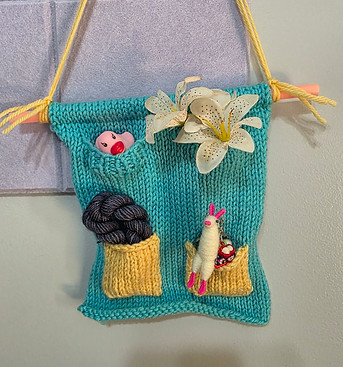
Pockets can be a great addition to our garments and knowing which method to use (and when) changes everything. In this hands-on class, we’ll tackle four essential pocket techniques every knitter should have in their toolkit: the classic sewn-on patch pocket, a seamless knitted-on patch pocket, a clever afterthought floating pocket worked after the fact, and a polished horizontal lined pocket knit right into your project. By the end, you’ll know exactly which pocket to reach for on your next sweater, cardigan, or bag, and have the skills to knit it with confidence!
Skill Level: Intermediate
Materials Fee: None
Homework: Pocket Change Homework
Supplies to Bring: Homework (see pdf). Yarn: Worsted weight yarn (more of homework yarn) in same or contrasting color. Needles: same needles used for homework. Two smaller dpns, Tapestry needle, Scissors, Fingering weight yarn in various colors (scraps) – optional. Chopstick, dowel, or straw (for finished project). Ribbon or yarn (for hanging finished project)


Tapestry Crochet– Amie Palmer
April Only
Discover the vibrant world of tapestry crochet in this colorful creativity-packed workshop! Whether you're new to stranded color work crochet techniques or eager to refine your skills, this class will show you how to create multi-color designs with beautifully crisp color work. We'll focus on a special stitch that elevates your tapestry crochet, helping your motifs look cleaner and sharper. As we work through a small project together, you'll learn how to manage multiple colors, read charts, and create smooth transitions that make your patterns pop. By the end you'll be ready to bring stunning richly patterned tapestry crochet into all your future projects.
Skill Level: Advanced Beginner
Required Skills: Must be able to form rows of single crochet
Materials Fee: $5
Homework: None
Supplies to Bring: Solid colored sport/DK weight yarn in a light to medium color, crochet hook slightly smaller than typical for the yarn (possibly USD/2.75-3.25 mm or slightly larger), locking stitch markers.

Seaming Crochet with Confidence–Vincent Williams
If you want to perfect your weaving in of tails/ends, gain the confidence to finish a sweater that’s crocheted in pieces and seamed, or seam 100 squares together for that beautiful blanket but don’t know where to begin, this is the perfect workshop for you! Students will learn the tools, techniques, and mechanics of weaving in ends + seaming flat panels of crocheted fabric, including reading your fabric, identifying selvedge stitches, how to pair foundation chain edges and tops of completed stitches together, how to pair sides of rows together, learn different seaming techniques (ie., whip stitch vs. mattress stitch), learn different methods to weave in your ends, and when to (or when you actually don’t need to) employ these techniques.
Required Skills: Chain Ring or Magic Ring, chain, single crochet, double crochet, simple increases using single crochets and double crochets, slip stitch
Homework: Crochet and block all the shape swatches from the Crochet Seaming Essentials Pattern Pack [100% off discount code will be provided to class participants] before the start of class.
Materials Fee: None
Supplies to Bring: 390-420 yards of worsted weight yarn to create the squares/rectangles, contrast color (or same color) worsted weight yarn for seaming these squares/rectangles together, contrast color worsted weight yarn for crochet-as-you-go joining of 4 or 6 granny squares (Note that you will be using some of this yarn to crochet and complete some shape swatches to bring to the beginning of this class.), US H/5mm crochet hook, locking (or split ring) stitch markers, tapestry needle, scissors
August Only
Sunday Morning Class Descriptions

Brioche Next Steps - Increases, Decreases and Cables –Jenn Lampen
If you’re comfortable with basic two-color brioche knitting, but want to learn the skills to knit intricate brioche designs with flowing leaves or twisting cables, this is the class for you. You will learn the most common increases and decreases used in brioche for both fabric shaping and patterning. You will also learn basic right leaning and left leaning brioche cables that create cable crosses on the right side of the fabric and maintain undisturbed brioche rib on the wrong side.
Skill Level: Advanced
Required Skills: Students must be comfortable with basic brioche knitting flat.
Materials Fee: None
Homework: Click Here
Supplies to Bring: Two contrasting colors of DK or worsted weight yarn (stash leftovers are fine, solids or semi-solids recommended), US7 circular needles or size appropriate for your yarn, cable needles, locking stitch markers


Knit Happens: A Lace Rescue Class– Heather Storta
Dropped a stitch three rows back? Lost track of your yarn overs? You’re not alone, and you’re in the right place! This hands-on class takes the fear out of lace knitting by teaching you how to catch mistakes early, fix them calmly, and keep your project (and your sanity) intact.
We’ll cover:
-
Prevention first: reading your knitting and spotting errors before they spiral.
-
Lifelines: placing them proactively as you knit and threading one in after the fact when you need a safety net.
-
Slowing down to think: how to pause, assess, and diagnose what actually went wrong.
-
Frogging with confidence: ripping back cleanly without losing your place.
-
Laddering down: controlled stitch-by-stitch correction instead of ripping out entire rows.
-
Crochet hook pickups: the go-to tool for rebuilding dropped stitches and yarnovers.
-
Basic to advanced fixes: from simple dropped stitches to untangling more complex lace pattern errors, we’ll cover them all!
By the end, you’ll leave with real repair skills and the confidence to tackle lace projects without panicking at the first mistake. Bring your homework and let’s fix it together!
Skill Level: Intermediate/Advanced
Materials Fee: None Homework: Knit Happens Homework
Supplies to Bring: Two Homework swatches, crochet hooks (a double ended one is great), small dpns, locking stitch markers, waste yarn, tapestry needle, blocking mat (or foam board), rust proof pins, point protectors (or cable stoppers), patience!

Pick Up Where you Left Off!! – Amie Palmer
We'll take the mystery out of picking up stitches and turn this essential knitting skill into something you can approach with confidence. You'll learn how to pick up stitches neatly and evenly along edges, avoid gaps and puckering, and understand where to place your needle for the best results. Whether you're adding a button bank, picking up for a seamless sweater project, or finally tackling that project that's been patiently waiting in your knitting basket, this hands-on workshop will help you pick up where you left off - and keep knitting! Bring your needles, your curiosity, and perhaps that project you've been avoiding. We'll pick it up from there!
Skill Level: Advanced Beginner
Required Skills: Casting on and off, knitting and purling
Materials Fee: $5
Homework: Pick Up Where you Left Off Homework
Supplies to Bring: Completed homework, needles from homework, similar weight yarn in a contrasting color, tapestry needle, stitch markers, crochet hook in similar size to knitting needles used for homework.
April Only

Correcting Mistakes: Cable Editions–Vincent Williams
Learn the tools, techniques, and mechanics of correcting cable errors, including reading your knitting to identify common mistakes, tinking (unknitting), saving dropped stitches, frogging, inserting lifelines (proactive vs reactive), reading fabric to find your place in a pattern, and when (or when not to) employ these techniques. Together, students will work through the Can You Cable It? Square by Vincent Williams and walk away with the knowledge of how to correct common errors with ease and confidence!
Skill Level: Adventurous Beginner - Intermediate
Required Skills: Cast on, knit, purl, simple cable knitting, reading a cable chart that is worked flat, or reading written instructions for flat cable knitting.
Homework: Download the Can You Cable It? Square pattern from Visuvio's Crafts [100% off discount code will be provided to class participants]. Knit up to the starting checkpoint of the pattern titled “Pausing Point for Beginning Class.”
Materials Fee: None
Supplies to Bring: At least 185 yards of worsted weight yarn (Note that you will be bringing this yarn as an in-progress swatch to the beginning of this class.), US 8/5mm 24” circular needle, US 8/5mm double pointed needles or a second circular needle, US H/5mm crochet hook. cable needle (Vincent enjoys the "J" shaped cable needle), locking (or split ring) stitch markers. tapestry needle, stitch stoppers (optional), Pattern: Can You Cable It? Square, available on Vincent’s website
August Only
Sunday Afternoon Class Descriptions

Estonian Inlay & 2-Colored Estonian Braids - A Short Reprise Hat –Tanis Gray
An ancient Estonian technique sometimes referred to as Roosimine, this embroidery-like technique is a very distant cousin of intarsia combined with stranded colorwork knitting worked by making floats on the right side of the work. We’ll also learn 2-color Estonian or Vikkle braids. Add another colorwork technique to your arsenal as we work up A Short Reprise Hat pattern!.
Skill Level: Advanced Beginner
Required Skills: Ability to knit and purl and work in the round
Materials Fee: $3.50
Supplies to Bring: 3 Highly Contrasting Shades of DK-Weight Yarn (175yds/160m of MC, 50yds/46m of CC1, and CC2 – minis work well) – no fuzzy, novelty, or highly variegated fibers, Size US 6 (4mm) 16” Circular Knitting Needles, Size US 7 (4.5mm) 16” Circular Knitting Needles, Size US 7 (4.5mm) DPNs, Stitch Markers, Sticky Notes, Tapestry Needle. Copy of A Short Reprise pattern will be supplied in class handout.
Homework: (MC is white speckled and CCs are pink and green in the sample): With MC and smaller circular needle, CO 100 sts using Longtail CO method. Join into round being careful not to twist sts. Pm for bor. Work [k1tbl, p1] for 10 rounds. Switch to larger needle and [k10, M1L] across round – 110 sts. Knit 3 rounds.

Yarn Substitution –Jenn Lampen
The right combination of yarn and pattern can make all the difference in creating the project of your dreams, but using the yarn recommended in a pattern is not always possible and choosing an alternative can feel like walking through a minefield. In this class, you will learn about fiber content, spinning types, ply, grist, color, and other factors that will help you make informed decisions so your projects turn out exactly as you envision. We will then knit small swatches with several different yarns to see to see how these principles effect not just gauge, but also drape, stitch definition, and other factors that determine the final look and functionality of your fabric.
Skill Level: Beginner/Intermediate
Required Skills: Confident with basic knitting techniques like knitting, purling, casting on and binding off, and pattern reading
Materials Fee: $12
Homework: None
Supplies to Bring: US7/4.5mm knitting needles.

On the Grid: Fun with Filet Crochet–Marie Niesse
Make a picture using chain spaces and double crochet stitches in this clever crochet technique! We’ll also cover which yarns to use, methods of making your design pop and ways to avoid a lean in open grid stitches.
We’ll use the Spring Flowers Filet Scarf by Jessica Rebecca (free on Ravelry and used with permission) to practice this eye-catching crochet technique.
Skill Level: Beginner
Required Skills: Must be able to count stitches and work double crochet and chain stitches
Materials Fee: None
Homework: None
Supplies to Bring: 1 ball of a yarn of your choice. Please bring crochet hooks 1 or 2 sizes smaller than the ball band calls for.
April Only

Tapestry Crochet/Crochet Colorwork
– Vincent Williams
In this tapestry crochet class, we will learn fundamental skills, tips, and tricks to create a polished project in this fun colorwork technique! Select your favorite solid, speckled, or gradient color combinations to crochet an e-reader pouch/notions pouch, which will steep you in colorwork confidence and let your creativity fly. Students will learn how to work in the round, transition between colors, read colorwork charts, and use efficient yarn management techniques.
Skill Level: All levels
Required Skills: Chain, Single Crochet
Materials Fee: None
Homework: None
Supplies to Bring: DK-weight yarn, 100 yards Main Color + 100 yards Contrast Color, US E/4.50 mm crochet hook, 2 locking stitch markers (optional), Scissors, Tapestry needle, Pattern: Love In Stitches Pouch, available via VisuviosCrafts.com [100% off discount code will be provided to class participants]